The Arch
4 minutesNo notes in this margin yet.
Soon you’ll be able to leave a note on any line, or stamp it:
chillscalled itre-read thisoh no
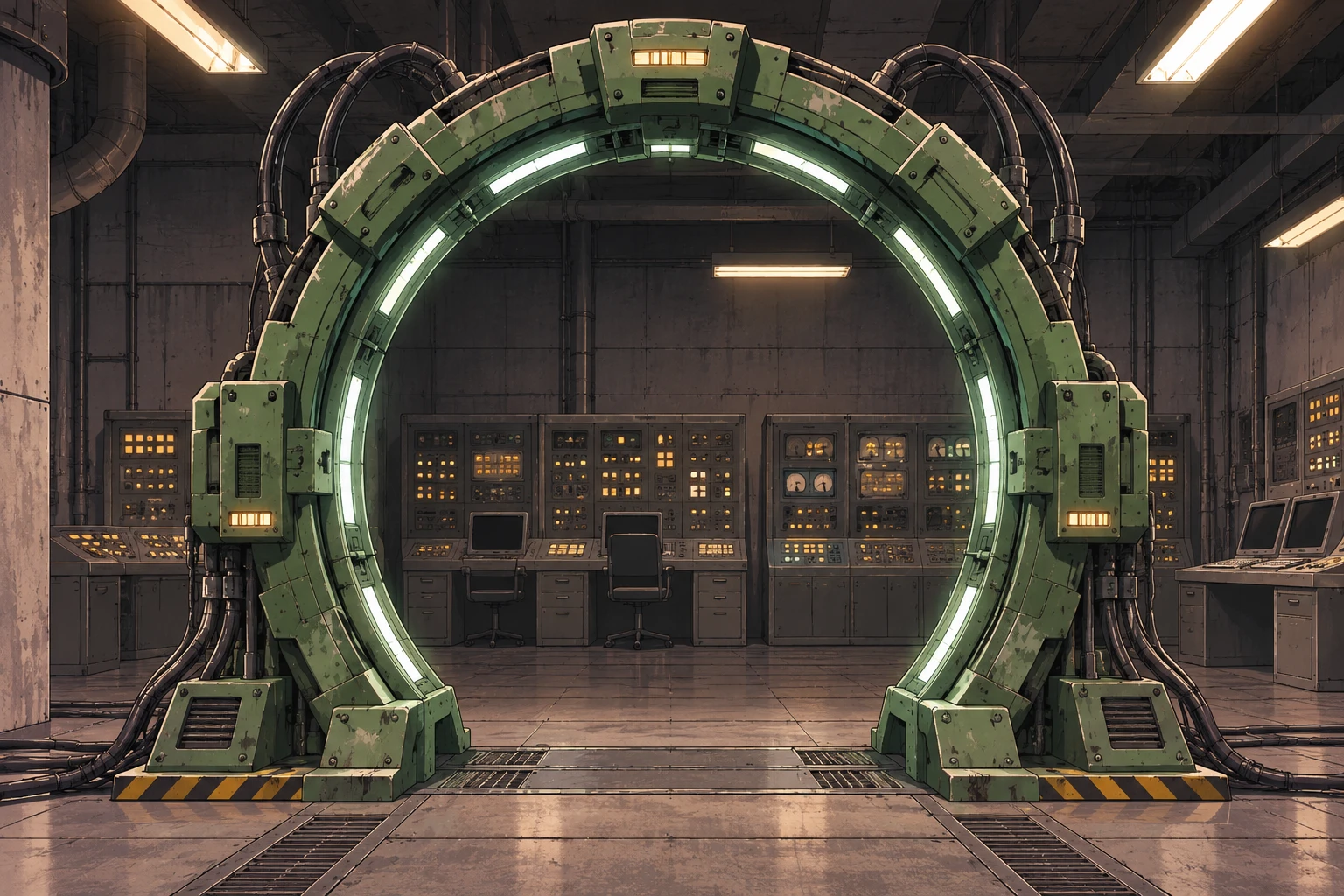
The arch stood in the middle of the room like a doorway someone had forgotten to build a house around. It was green and metallic and humming at a pitch Duncan could feel in his back teeth. Behind it, banks of lights blinked in patient patterns above rows of switches, and each bank was watched by an operator who had given up pretending not to stare.
He had come here in a black car that smelled of leather and money, down an elevator that kept descending long after it should have stopped, into a bunker beneath who-knew-what. It was all too well funded to be a joke. It couldn’t be real, either.
“You want me to walk through that?” He held up his left wrist. Someone had strapped a plain steel band to it, like a watch with the face removed. There was a single smooth button where the face should have been. “And this?”
“The arch is a portal to C-103,” said a man beside the machine. “The Wall. The band brings you home. Press it and you’re out.”
“Right, right. I go fight Hell, and if I get bored I push the button.” He smiled. They were full of it, and the smile was a way of keeping his knees where they were. “Then why not send a million soldiers? Storm the place.”
“Where to start, good lord,” said Bill behind him. “The machine holds ten thousand people at a time. Send ten thousand and one, and the extra is pushed back out. Second, we’ve sent probes, and even getting a probe there is hard. From what we can tell the other side is bigger than the sun, and full of things we have never seen. Send every person alive, and with no weapons they’d be dead inside a month. If we’re lucky.”
“No weapons?”
“That’s all you took from what I said?” Bill sighed. “Weapons are explained on the other side. Just walk through. And take your clothes off first. We can only send a body, and the band.”
Duncan turned slowly. “Fuck me. You want me to go in there naked. What about what’s in my stomach? I had coffee.”
“Wow,” said one of the operators, impressed. “Nobody’s ever asked that.”
“Because it doesn’t matter.” Joan had run out of patience somewhere on the stairs. “What’s inside you goes with you. If you want to swallow a rifle, which won’t help in there, be my guest.”
“A ray of sunshine, this one.” He folded his arms. “Fine. But I want extra. Another thousand. I’m going in naked.”
“Done,” said Bill, without a flicker.
He had braced for a fight and had nowhere to put it. He swallowed and started on his buttons. “Can she leave? I mean—”
Bill lifted two fingers. Joan turned on her heel and went out without a sound. A minute later Duncan stood bare in the humming cold, both hands cupped in front of him, while across the room a woman at a console went the color of a ripe tomato.
“You don’t have to stare, lady.”
She dropped her eyes to her switches.
“Just walk through?”
“Walk through,” said Bill, “and go out the way you came. The door will be open. Someone will make sure you’re properly informed. There will be clothes.”
“Why doesn’t the thing on my wrist just take me in?”
“The arch tunes you to the place. The band lets you drop that, and puts you back as you were.” Bill shrugged. “We don’t know much more than that ourselves. Go and see.”
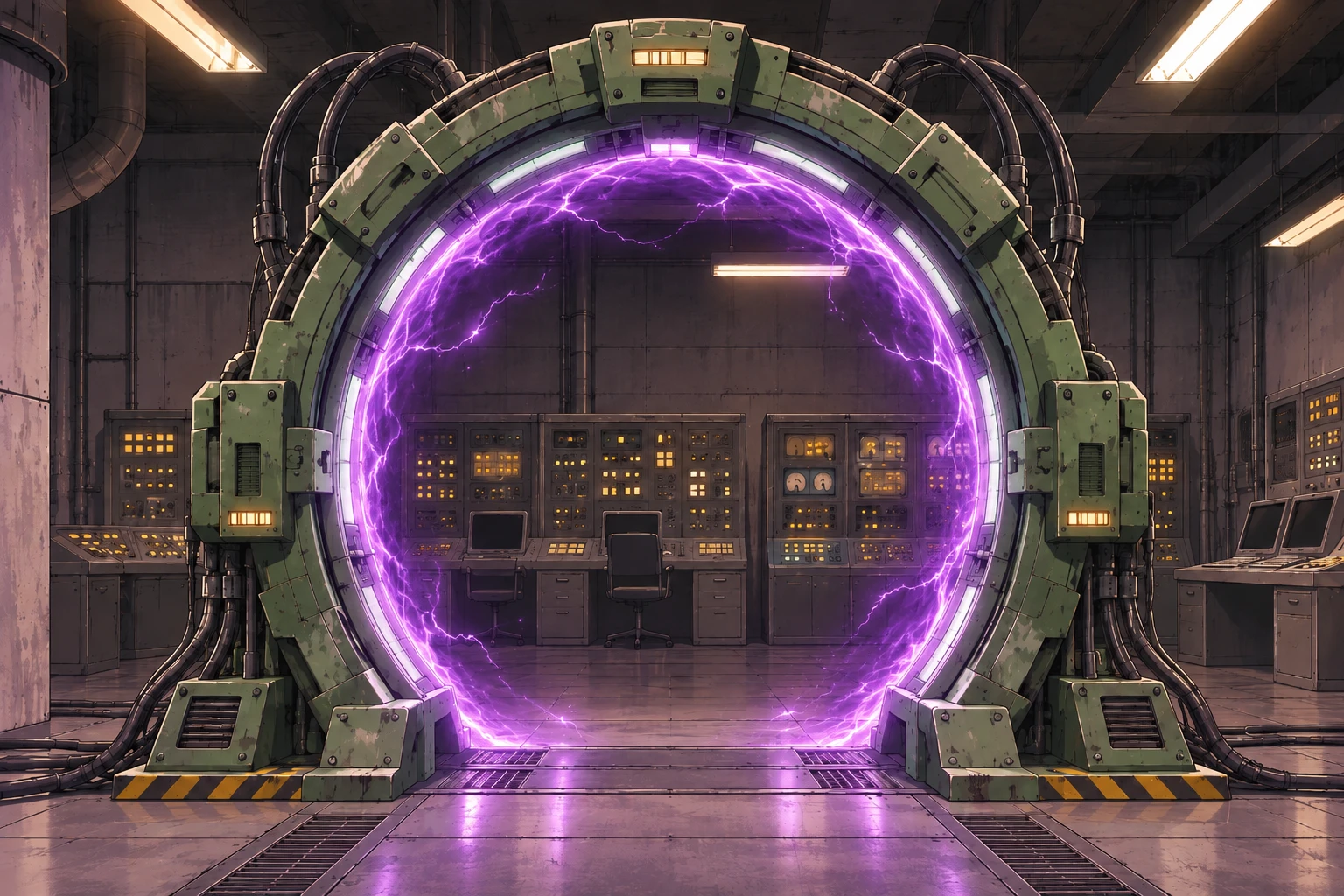
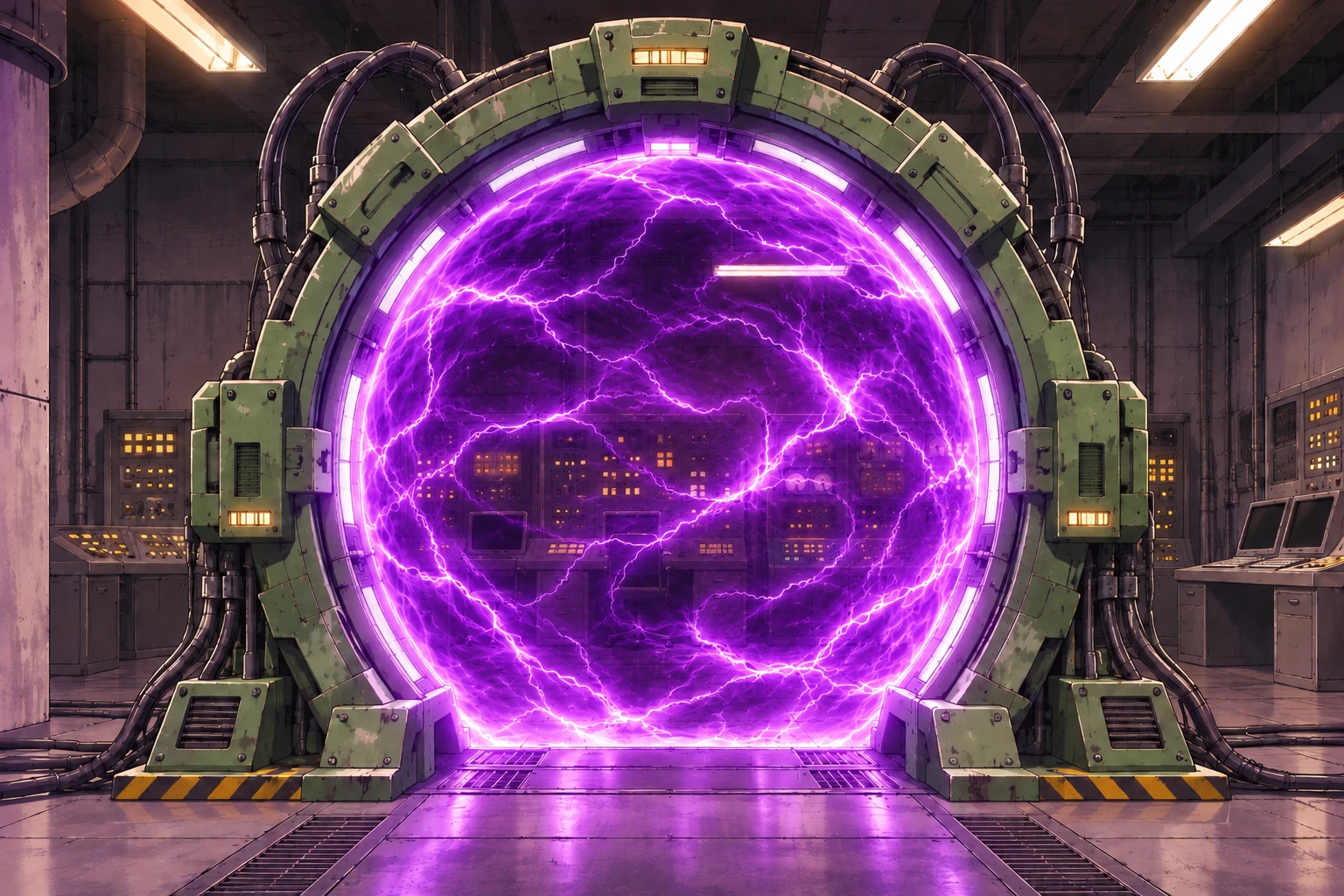
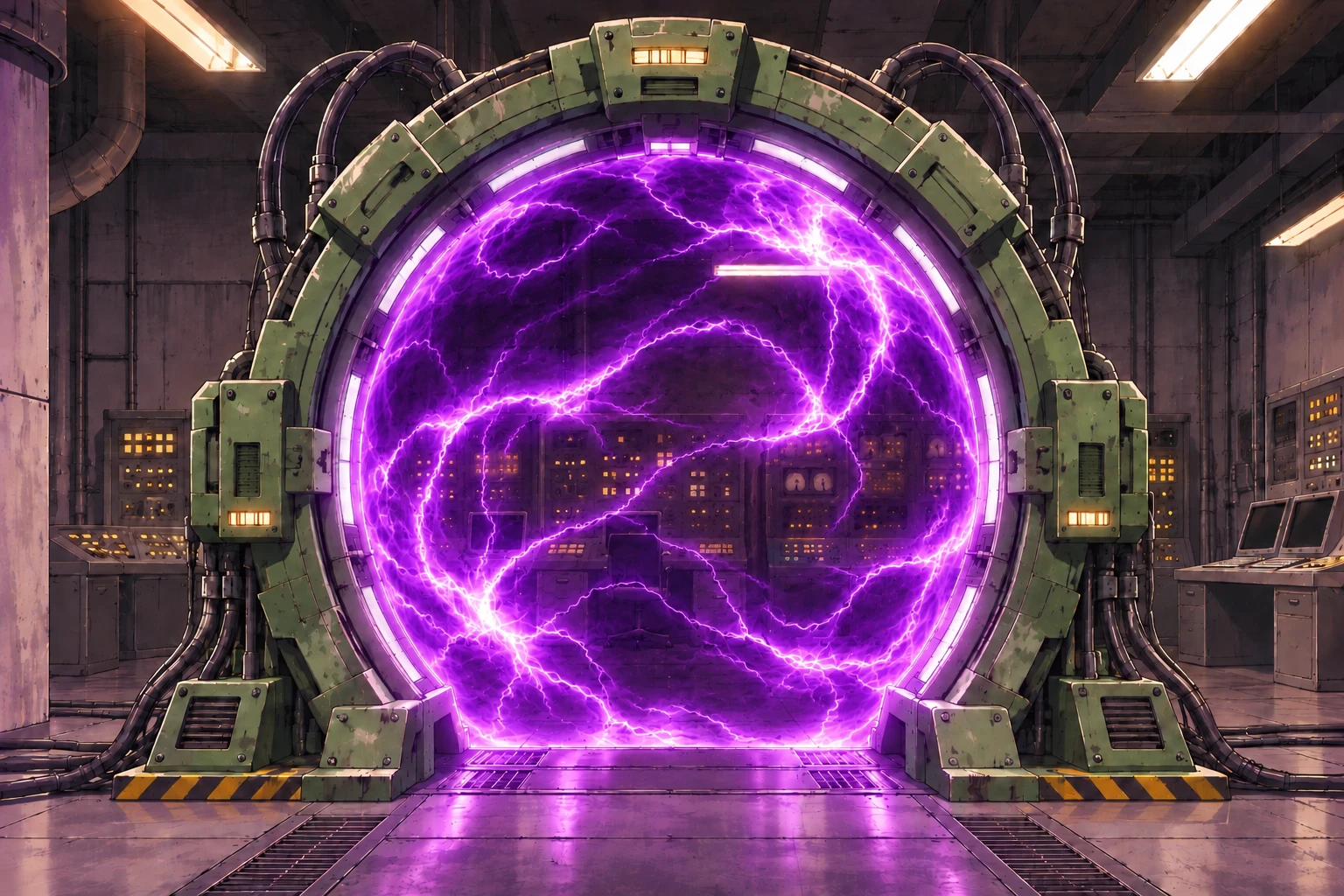
Duncan turned. Somebody at a console threw a switch, and the hum climbed until he could feel it in his fillings. Violet light crackled into the empty ring, thin threads at first, then more, then a slow storm of lightning turning on itself, until it filled the arch from edge to edge. The hairs were standing along his neck. A minute ago it had been funny. Now it felt real, and wrong, like the lip of a well in the dark.
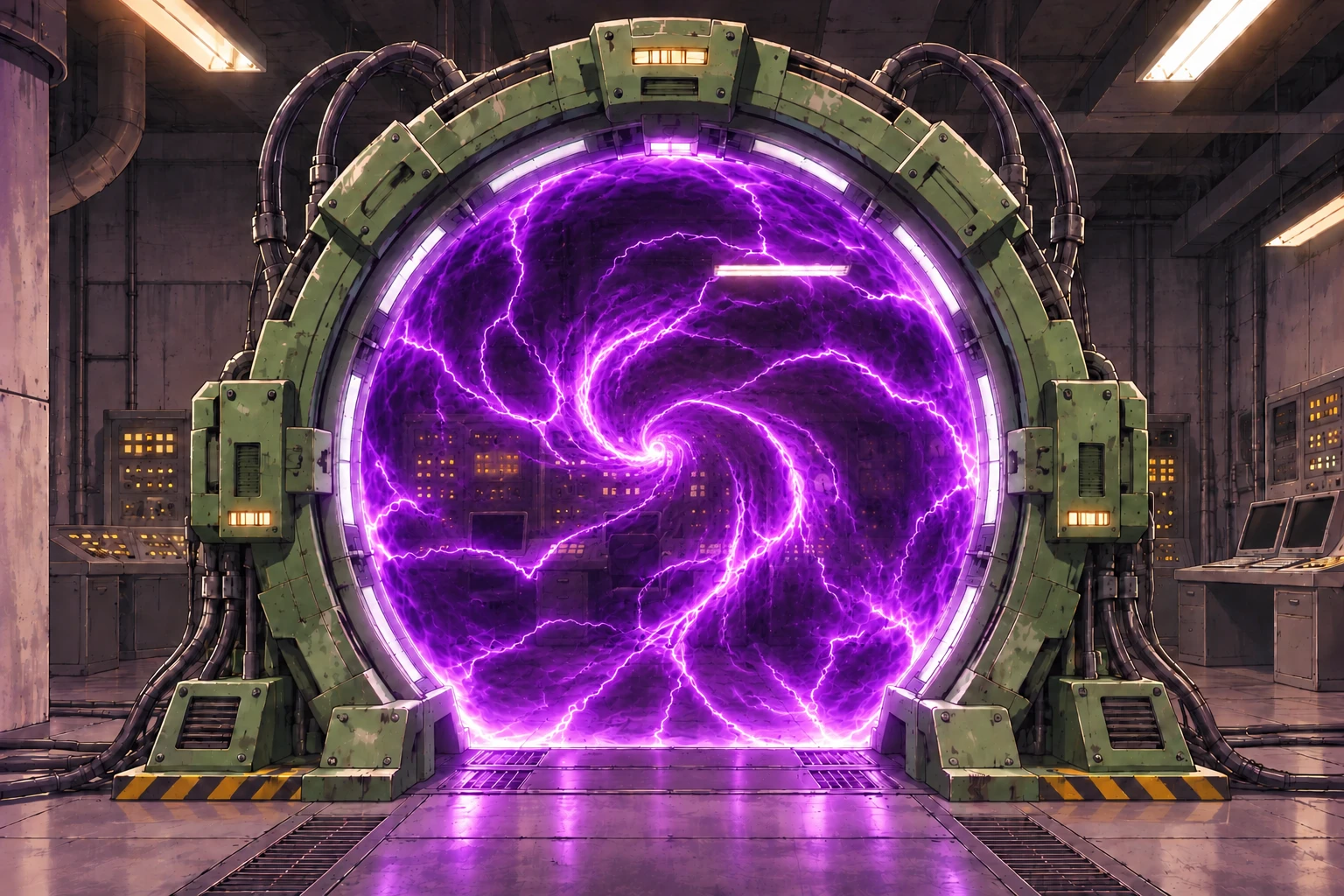
One deep breath. Then he stepped through.
Nothing hummed. Nothing blinked. He turned, expecting an apology or a laugh or a hand on his shoulder, and found the same room, every console dark, every operator gone. He could see perfectly well, though he could not find where the light came from.
“Hello?”
His voice came back flat and small. A folded one-piece suit lay on the floor near the arch. He pulled it on, grateful for the cloth, and followed the open door up a stair that took ten minutes, then a corridor, then another, then twenty minutes of empty rooms and silent machinery.
Everything carried a faint violet tint, as if he were wearing sunglasses of the palest purple. He drew a breath, steeled himself, and stepped outside.
Nobody. No one waiting to greet him, to inform him, to do anything. He thought briefly of the button on his wrist and decided against it. He was alone, and the street was very long, and there were no cars, no buses, no transport of any kind.
“Shit.” He would have to walk.
As he walked he noticed that his body felt wrong. Not worse. Lighter, by fifteen or twenty percent, the way you feel the first moment after a heavy pack comes off your shoulders. His leg still ached, but at a remove, as though it belonged to a man in the next room. He bent his knees and jumped, and the ground fell away much farther than it should have. He landed grinning.
This was going to be fun.